TASCHEN's 25th anniversary - Special edition!
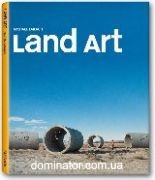
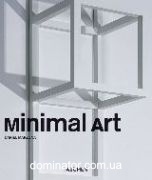
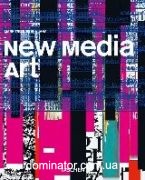
Who could possibly have forecast on New Year's Eve 1899 that, one hundred years later, painting and sculpture would be only options, not prerequisites? The term "art" has been defined and redefined so many times over the last 100 years that it has gained entirely new social, political, and technological meanings.
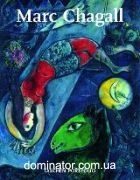
A unique world full of pathos, poetry, humour and enchantment
Marc Chagall, who died in 1985 at the age of 97, was without doubt one of the greatest artists of the 20th century. In his paintings he created a unique world full of pathos, poetry, humour and enchantment, drawing on vivid memories of Vitebsk, his birthplace and childhood home in today`s republic of Belarus. He was clearly influenced by Byzantine and Russian icon painting and folk art, but wished his own mythologigal floating figures and symbolism to be interpreted freely.
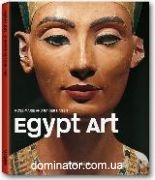
Treasures from the ancient land of the Pharaohs
The art of ancient Egypt that has been handed down to us bears no names of its creators, and yet we value the creations of these unknown masters no less than the works of later centuries, such as statues by Michelangelo or the paintings by Leonardo da Vinci. The present volume introduces a series of such masterpieces, ranging from the Old Kingdom, or the 3rd millennium B.C., to the Late Period in the 9th century B.C. The works in question are sculptures, reliefs, sarcophagi, murals, masks, and decorative items, most of them now in the Egyptian Museum in Cairo, but some occupying places of honor as part of the world cultural heritage in museums such as the Louvre in Paris, the British Museum in London, the Egyptian Museum in Berlin and the Metropolitan Museum in New York.
Otherworldly works
This book brings together a colorful mixture of various works focusing on themes of the fantastic and surreal, starting with Böcklin's "Toteninsel" and including Dorothea Tanning, Max Ernst, Hans Bellmer`s dolls, the Australian painter Sidney Nolan, Giger's monsters, Cattelan's pope, and the Chapman brothers` hybrids, as well as surreal painting from Magritte and Delvaux, the mystical and sensual work of Gustav Klimt, and Frida Kahlo`s dreamlike self-portraits.
The Italian avant-garde
Inspired by the development of Cubism, the Futurist movement was founded in 1909 by Filippo Tommaso Marinetti, along with painters Giacomo Balla, Umberto Boccioni, Carlo Carrà, and Gino Severini. The school, which celebrated technology and the mechanical era, was comprised of painters, sculptors, designers, architects, and writers. Motion and machines were two main themes of this movement, which attacked the bastions of establishment and sparked controversy by its glorification of war and support of Fascism. Experimenting with movement, and speed, and abstract light and color, the Futurists developed approaches and techniques that were revolutionary at the time, and in retrospect one can see that the Futurists influenced other avant-garde art movements, most notably Russian Constructivism.
The secrets of the unconscious and the labyrinths of the mind
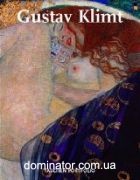
The Vienna of the Belle Epoque - of Sigmund Freud, Otto Wagner, Mahler and Schönberg - has prompted the admiration of the whole world for the quality and diversity of its cultural and artistic life. And Gustav Klimt (1862-1918) was without doubt its defining and most fascinating painter.
Art history's most important movements and genres
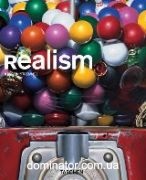
Art imitates life in the work of the realists. Through painting, photography, and sculpture, 20th century realists invoke reality in works that capture what Freud called "the uncanny"-the inexplicable strangeness of something which seems at once real and not real.
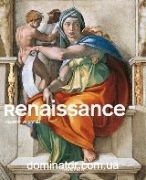
The rebirth of culture
Art as we know it today could not exist had not the revolutionary work of the Renaissance artists paved the way. Widely considered the most important and influential movement in the history of fine arts, literature, architecture, and science, the Renaissance marked the emergence of Western civilization from the Middle Ages into the modern era. Beginning in the 14th century in Italy, the movement spread throughout Europe by the late 15th century, the main centers of fine art activity being in Florence, the Low Countries, and Germany. For the first time, art became intellectual; influenced by humanism, artists experimented with secular subjects and revived classical antiquity. Advances in anatomy and geometry produced more realistic depictions in terms of space and perspective for the Italians, while new oil painting techniques made their mark in Flemish painting and woodcuts and engravings were the specialties of the Germans.
The dramatic style of the 18th century
Emerging out of Baroque as a more relaxed style, Rococo was dominant in interiors, decorative art, and painting throughout Europe in the 18th century. With sentiment and emotion prevailing over reason, Rococo was a dramatic and theatrical style. In the Parisian art world, gallant scenes by Watteau, Boucher and Fragonard predominated, along with the delicate still lifes and genre paintings of Chardin. In Venice, we find the magnificent cityscapes and veduta of Canaletto and Guardi, along with Tiepolo's brilliantly illuminated ceiling frescos. London society celebrated portraitists of stature such as Hogarth, Gainsborough, and Reynolds, while in Southern Germany and Austria, pious images of celestial serenity created by Asam and Troger spanned the church ceilings.